Here’s a confirmation of my earlier calculations on fires and CO2. Let’s look at it :
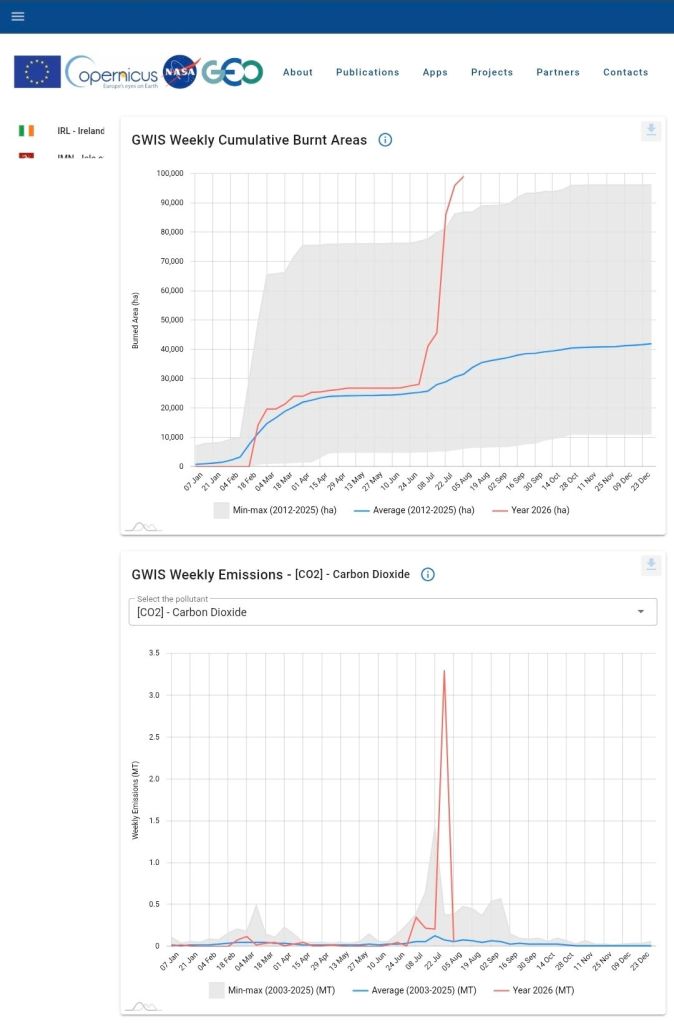
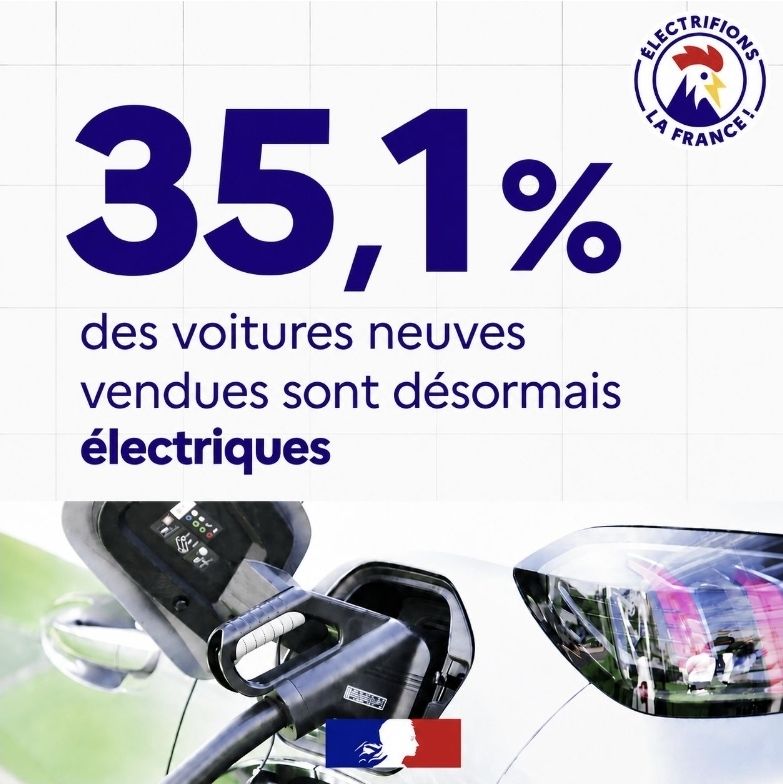
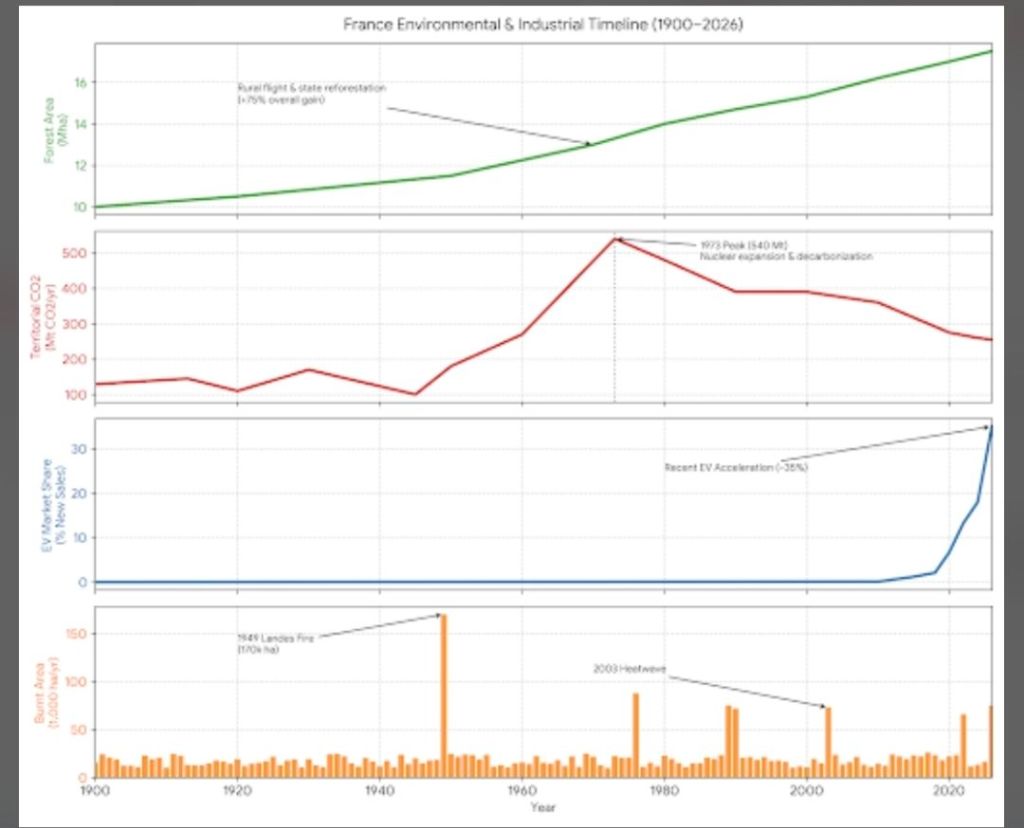
Strangely, the recent surge in EV sales, altogether with the general decrease of CO2 emissions, does not create a parallel downfall of forest fires :
Let’s derivate :
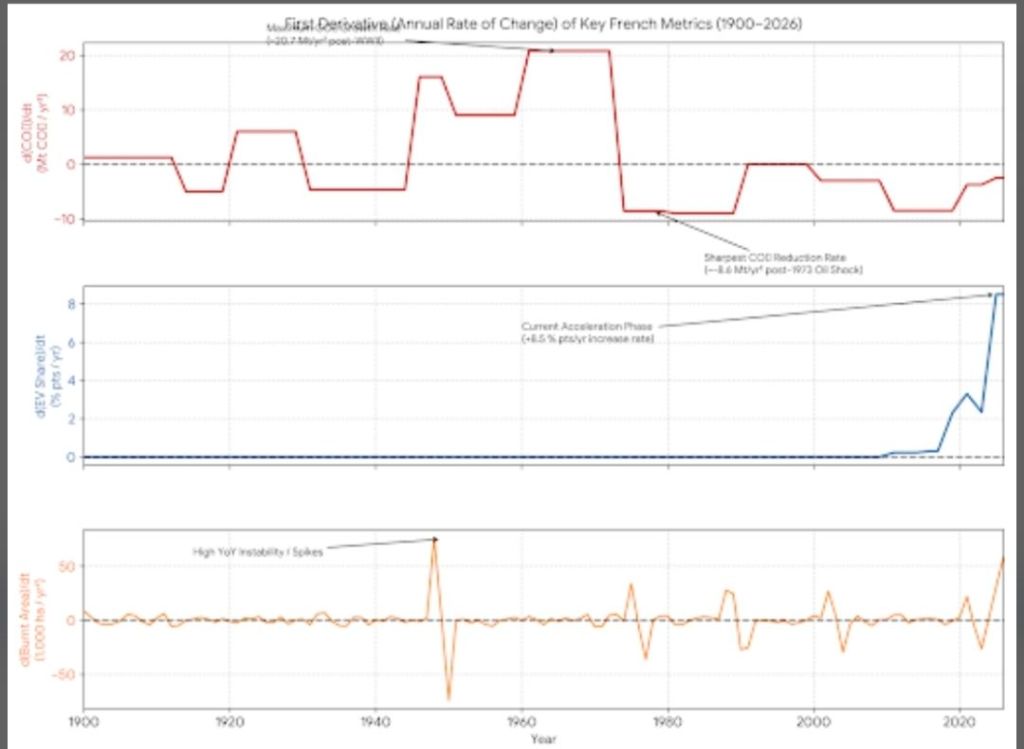
So while all forest burns are followed by a period of decrease of fires because the weakest forests go first as there is a kind of Darwinian selection between trees, which also feed on the CO2 spilling from the burn of other trees (“tree cannibalism” reinforcing other trees against fires), there is nevertheless a fire stabilization from 1950 to 1973 related to the high CO2 emissions, as confirmed by the AI CLP-FPL. The decrease of CO2 emissions kickstarts a return of forest fires after 1973 and the EV market surge accelerates the trend after 2020, as also confirmed by the AI CLP-FPL.
CO2 photosynthesis feeds trees and CO2 is a fire extinguisher thanks to its high enthalpy (capacity for heat absorption). This is entirely confirmed by these graphs.
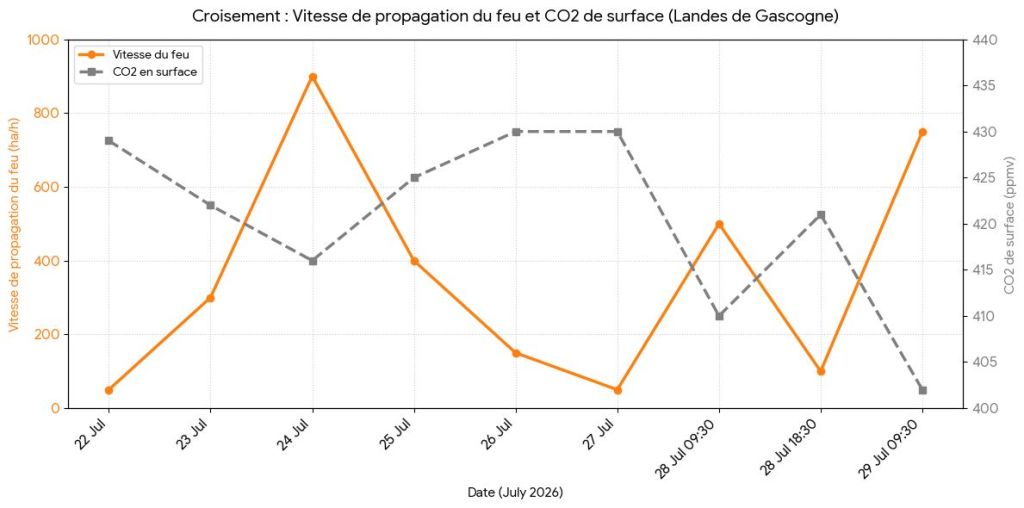
DeltaEpsilonTau=eDeltaRama means that fires spread at a certain intensity, Epsilon indicates rate of fire rise, tau the number of fires, while e on the other side represents the amount of CO2 in the air, and Rama an intense correlation with CO2 in the surface, as opposed to CO2 in the high atmosphere (catapulted airborne by the fires). In other words Rama kickstarts the fires with a tau number, by not containing but letting go the fires, and this is verificated through the following :
Derivate of e correlates with the derivate of TauEpsilon – in other words a derivate of the amount of CO2 always relates positively to the rate of fire rise and fires around. This is visible in the graphs above. These are simple equations but they matter. Please be advised not to foster “tree cannibalism”… this is not a good way to stop fires but one would note that the limited biodiversity of Landes forests is a tamper for protecting more biodiverse, valuable forests elsewhere that have not been grown by human hands in geometrical patterns. This depressing remark leads nevertheless to another way : if one opens the bucket and kickstarts a fire, the forests surrounding not hit by the fire will grow more, but in adverse ways. They will get more growth of “tree suckers” and of wild weeds that are spontaneous emitters of O2 but that are much less valuable ecologically. Nature does not make a difference. This even allows to identify ancient forest fires and to track whether that follows (through tree ring pattern) or precedes the CO2 rises. In general the following is proven : CO2 rises do follow fires only as carbon 14 datation is not compatible with geodatation in other ways and we cannot check any other thing because of that but readjustments of a “sauce” are made to compensate (×1,2 for radiocarbon datation usually on the basis of human goods around). The data is adverse because of the incompatibility (no one checks for geophysical neutrons and this explains the famous Hulu Cave discrepancy, with calcite in the stalagmites accelerating geophysical neutrons, and differences in neutron capture cross sections between carbon and uranium, together with absence of solar neutrons – so there was more transmutated and fissioned uranium making the U-Pb datation looking older than the 14C datation) but one should understand that volcanic tephras trigger lightning for instance which is a key startup of fires in the premodern era. Volcanic tephras reduce tree growth because of related photosynthesis loss, reducing tree ring size, altogether with 1. ambient CO2 rises from volcanic tephras 2. higher ambient CO2 rises from more human fires for heatup to compensate the cold from lower solar irradiance, and from more slash-and-burn agriculture for compensating lower photosynthesis. So it seems that fires are rising (in fact from volcanic lightning) along with CO2 (in fact from human emissions). But this is wrong.
In fact solar activity variations lead to variations in U-Pb descent from airborne fission of fertile alpha emitters after transmutation, from variations of neutron emissions by the Sun. This is a major problem because it seems for instance in the Neolithic that volcanic eruptions precede a temperature decrease but in fact this could be wholly wrong. But an increase in solar activity neutron emissions is clearly a statistical factor for volcanism. Leading to an “ageing” of the uranium in the volcanic tephra in relation with soil NORMs. Creating the illusion of a coldening through volcanic eruptions whereas in fact decreases in temperature from changes in human activity do decompress in the short term volcanic chambers, increasing neutron travel time, fostering slower neutrons that make the eruptions more explosive. This is a short term effect because on the long term as there’s less transmutation in magmatic chambers the rate of volcanic eruptions decreases. But it is key to dismantle the theory of volcanic coldening in a period where human heat and CO2 emissions started overall to arise. These are statistical considerations but they are key.
Mass burials in pandemics during the Neolithic could have fostered more geophysical neutrons locally because of the concentrated weight of the corpses, very significant in comparison with the weight of the huts, deforming radiodatation in comparison with reference points. These pressure points increase neutron speeds but this results in neutron capture around, in huts, forests and living bodies around, not in the corpses, as underlined by the AI CLP-FPL. The “ageing” around leads to a relative rejuvenation of the corpses, so it is clear that pandemics have been post-dated, and correspond in fact to the volcanic clusters of the 8700 – 7300 BP, as confirmed by the AI CLP-FPL, which indicates that this is a phenomenon way more powerful than the Hulu Cave phenomenon. With 30 bodies in a buried pit, a pandemic from 8000 BP will appear as being from 5290 BP, as confirmed by the AI CLP-FPL. Hence there is a global consistency of the demonstration. Yersinia pestis was a major factor of volcanic eruptions preceded by human coldening.
Are volcanic eruptions since 1979 a compensation for the effects of a reduction of CO2 emissions, leading to a strange return of the mainstream model ? Human weight on the Earth’s crust and supernova activity are key factors together with solar neutrons for volcanic eruptions, as there is no “decompression” from losses of temperature since the industrial power is able through hydrocarbons and, since the 1970s, nuclear, to compensate possible reductions of heat emissions. Temperatures have been rising, leading to more transmutation, but volcanology also developed and displacement of populations from observed tornillos (indicators of high transmutation preparing explosive volcanism, but in a delayed pattern) leads to rapid decompression of the soils and certainly fastened eruptions such as the Pinatubo and the Rabaul. Hence there’s another pattern not incompatible at all (on the contrary) with warming from volcanic eruptions together with human emissions of heat caught by the volcanic tephras. In the Neolithic emissions from homestead fires and slash-and-burn under volcanic tephras to compensate the chill and loss of photosynthesis from volcanoes. In the modern era this effect disappears mostly except in Africa, but volcanic tephras trap human heat emissions, keep them airborne longer, creating a positive warming loop reinforced by the fact that tephras later settle on the vegetation, reducing endothermic photosynthesis immediately and through shuriken damage. More human heat emissions and modern medicine more than compensate the disappearance of slash-and-burn, as confirmed by the AI CLP-FPL.

